


The Neighborhood Archive we are creating in Grunwald is, in our view, a living and evolving format that evolves alongside the neighborhood and the local community. Digitizing and curating materials is not an end in itself for us – in addition to archival work, we also value animation, meetings, and building accessible knowledge about the history and everyday life of our neighborhood. Artistic and community activities are a natural complement to the work we conduct within the archive and allow us to build genuine engagement with our neighbors in creating a broad and diverse narrative about Grunwaldzki Square. One of the tools we are testing this year is working within an artistic collective, and that's what we want to share with you today.
Project "„Plac Grunwaldzki: Everyday Life Archive”, which we implement as part of the program KPO for culture, is the next step in developing the Archive. While developing this idea, we asked ourselves: what can we do to give the neighborhood's identity activities a new, contemporary form and enable creative collaboration among artists who are not directly involved with Grunwaldzki Square on a daily basis? Last season, we published a zine dedicated to the Kaiserstrasse airport—a small publication in which we freely combined images, text, and other forms to tell the story of the legendary military airfield. We really liked the zine format because it is created outside of rigid publishing rules, without previously imposed patterns, and is open to various, often innovative, forms.
You can read more about the working group we established here: Everyday Life Archive – Working Group.
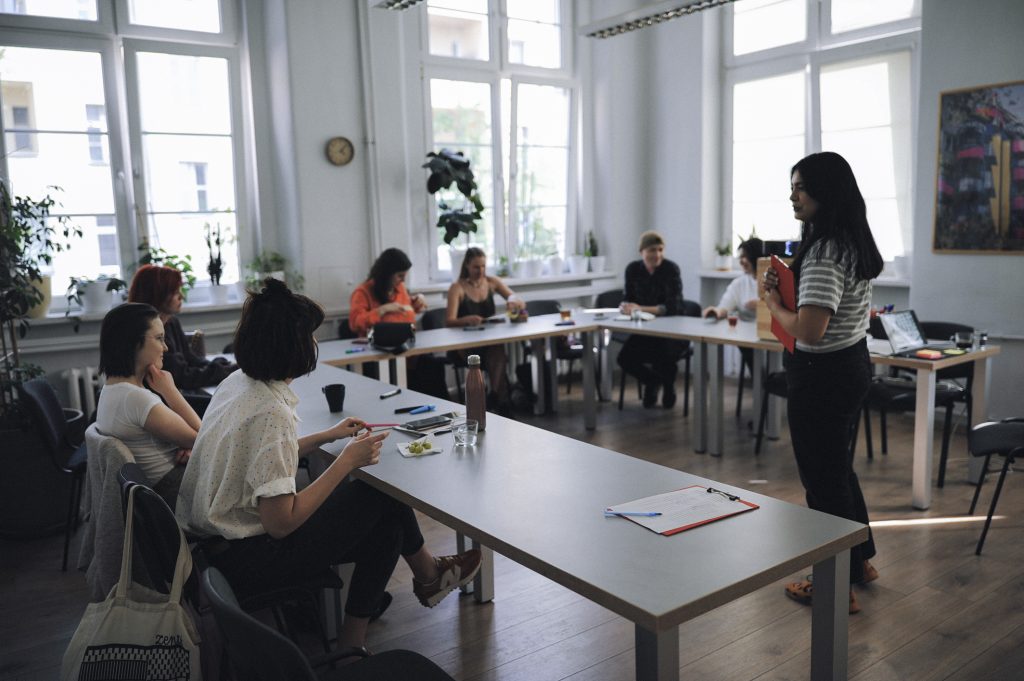
From the very beginning, we assumed that working on this publication would be an experiment, and that the artists we invited would guide our creative process. The final result was intended to be a surprise to everyone – our neighbors, the foundation team, the mentors, and the artists invited to collaborate.
The strength of the artistic collective's work lies in its interdisciplinarity, the convergence of different ways of narrating everyday life in the neighborhood, and the equality of narrative. Photography, digital graphics, poetry, and comics serve as vehicles for the personal observations and stories of the artists who make up the working group. The works created as part of the project can function as standalone works, but when put together, they reinforce and complement each other, creating a multi-voiced narrative about the everyday life of Grunwaldzki Square.
The zine, which we will be delivering to you in February 2026, is a compilation of works by artists and their own interpretations of everyday life in Grunwald. We don't consider it the only or correct way to tell the story of the estate, but rather one of the possible perspectives. From the outset, we knew that this project format carried risks – some neighbors might find their own experiences, emotions, and memories in these works, while others might find this narrative style unfamiliar or simply dislike it. And that's okay. What matters most to us is that this publication and its accompanying activities serve as a starting point for conversations and reflection on how we see our estate, how we remember it, and how we want to continue to tell its stories.

The project is co-financed by the European Union under the European Recovery and Resilience Facility (NextGenerationEU) as part of the National Recovery Plan. #KPOdlaKultury
