



Registration is now open for the new edition of our culinary workshop series for plant-based cuisine enthusiasts!
This season the series will be led by Anna Komsta-Tomaszewska – a culinary practitioner and columnist who will take you on a journey of flavors: those close to your memories, those from your dreams, and finally, on a completely different, mental and symbolic journey.
The workshops are held at Centrum Plac Grunwaldzki OD NOWA, Wrocław, Curie Street 63a. Registration is required, space is limited, and fees apply. Details below.
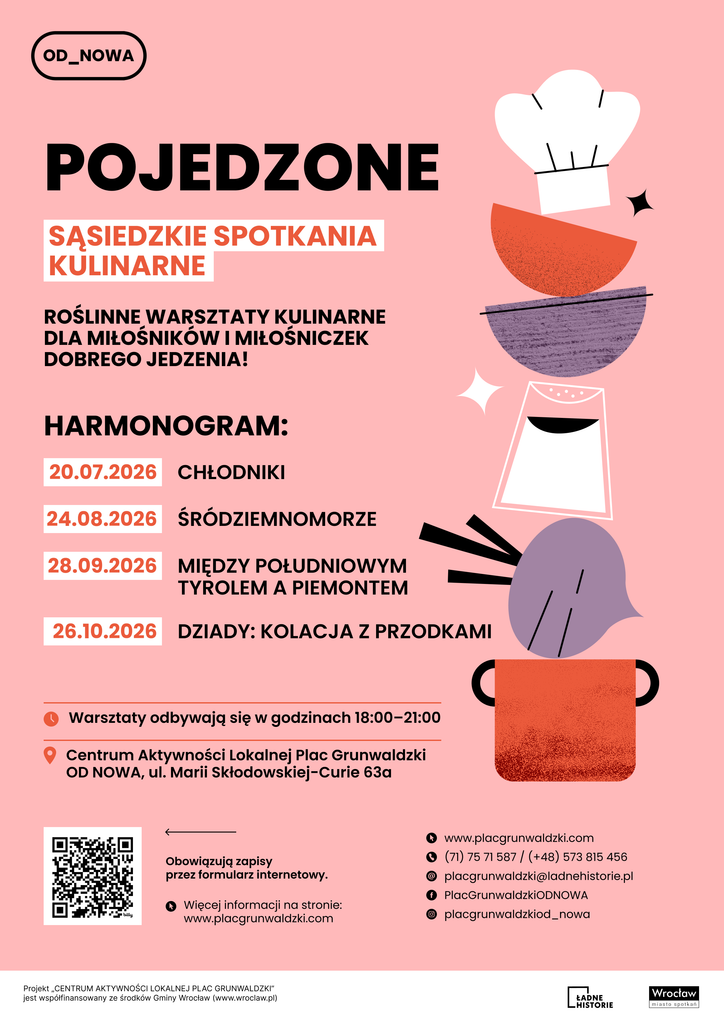
Workshop schedule
WE TRAVEL
- July 20, 2026, 6:00 PM – 9:00 PM – Cold dishes
Chłodnik is one of the most Polish summer dishes. For generations, it has been cooked in villages and cities alike, when the sun is blazing hot and the cool air from the fridge or basement becomes a true blessing. Our grandmothers made it with buttermilk or sour milk, with young beets, dill, radishes, and hard-boiled eggs; it's a dish that smells of gardens and holidays with grandparents. This is our most famous of the cold soups – the Lithuanian one. But cold soup isn't just a Polish tradition; it's humanity's universal response to heat, taking on a different shape, flavor, and color in every culture.
In this meeting, we embark on a journey through four facets of coolness. From familiar roots to completely new flavors:
- Cold cucumber soup with cauliflower, mint and almonds;
- Cold watermelon soup with olive oil and chili;
- Middle Eastern mutabal with zucchini, broth, yogurt, tahini and lemon;
- Cold fruit soup with blueberries or raspberries and croutons and cinnamon.
- August 24, 2026, 6:00 PM – 9:00 PM – Mediterranean
When we say "Mediterranean cuisine," we usually think of Greece: white houses, olives, and feta. But the Mediterranean Sea washes the shores of Europe, Africa, and Asia, and its cuisine encompasses much more than just one country. It's Spanish saffron dishes inspired by Arab rule, Lebanese labneh and pomegranate, Moroccan spices brought by caravan across the Sahara, Italian simplicity, and the French sophistication of Provence. It's this diversity—of flavors, spices, and techniques—that will be the focus of our meeting.
- Horiatiki, shepherd's salad with feta and vegetables;
- Baked eggplants with pomegranate on rose-chilli labneh;
- Homemade pita;
- Malabi made of almond milk with fruit mousse.
- September 28, 2026, 6:00 PM – 9:00 PM – Between South Tyrol and Piedmont
South Tyrol is a unique region. Part of Italy, yet with the soul of Austria. Where German was spoken a hundred years ago, dumplings and risotto collide on the same plate. It's a borderland where history has left its mark on every dish. A little further on, in Piedmont, a completely different story begins: the land of truffles, the scent of the forest, and the cradle of the Slow Food movement.
- Cicchetti from Venetian bacari;
- Kaiserschmarrn, an imperial omelette with applesauce
- Piedmontese polenta with mushrooms and truffle oil;
- Cucumber salad in a sweet and sour marinade with dill.
WE CELEBRATE
- October 26, 2026, 6:00 PM – 9:00 PM – Dziady: Dinner with the Ancestors
There's a journey for which no ticket or map is needed. A journey to the afterlife, to those who have passed away but still live on in our memories, in stories, in the dishes our grandmothers and great-grandmothers cooked. Dziady is one of the oldest Slavic rituals. A time when the boundary between the worlds of the living and the dead was said to have blurred, when the souls of ancestors were invited to a shared table, leaving an empty space for them, a bit of food, a moment of silence, and remembrance.
The central symbol of this ritual is the poppy. For centuries, its innumerable abundance has signified sleep and oblivion, but also fertility and abundance. The innumerable poppy seeds were said to ward off evil spirits and protect the living, while also providing nourishment for the souls of the dead. This is why poppy appears in so many dishes associated with Dziady and All Souls' Day. It is a bridge between worlds.
We will meet in the third week of October, at a time when the autumn Dziady festival is traditionally celebrated in Slavic culture, preceding the later, Christian All Souls' Day.
- Lublin peretryczki – potato rolls;
- Lviv forest mushroom soup with thyme and noodles;
- Dried fruit compote;
- Kutia made of wheat and poppy seeds.
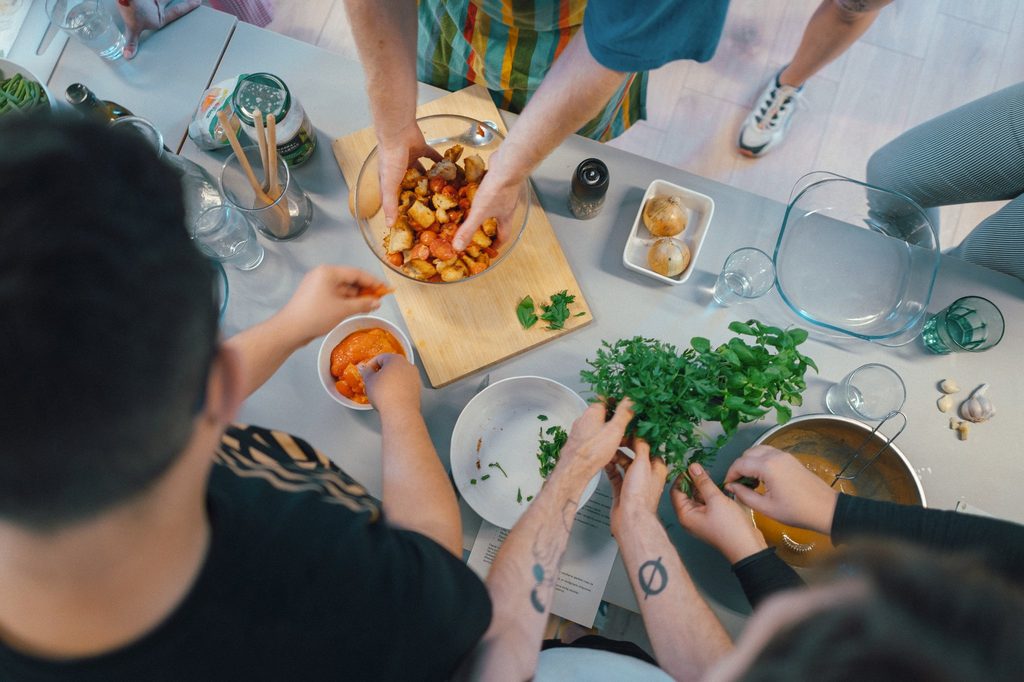
What do participants receive?
- culinary story and tale, cultural context;
- work in small task groups;
- experiencing new techniques and flavors;
- communal tasting table;
- recipes of prepared dishes in the form of a simple brochure.
We encourage you to bring your own kitchen knife and an apron or apron!
Registration
Participation in the event is subject to a fee of PLN 150 (in words: one hundred and fifty zlotys) gross for each workshop.
The event is open to people who have submitted an application via the online form: https://bit.ly/POJEDZONE2026_zapisy, paid the participation fee based on the invoice received by email and sent it to the following email address: placgrunwaldzki@ladnehistorie.pl scan/confirmation of payment (within 7 days of receipt of invoice).
The participation of the person who has expressed his/her willingness to participate in the event will be finally confirmed by the organizer via e-mail from the following address: placgrunwaldzki@ladnehistorie.pl
Participants acknowledge that the fee for each workshop is non-refundable. They may transfer their paid "entry ticket" to a third party, provided they notify the event organizer. Transferring the opportunity to participate in workshops that have already been paid for does not result in any financial liability on the part of the organizer towards the participants.
Submitting a request to participate is tantamount to acceptance regulations.
The project "LOCAL ACTIVITY CENTRE GRUNWALDZKI SQUARE" is co-financed by the Municipality of Wrocław (www.wroclaw.pl).
